Life Lessons from the Inca Trail
On New Year’s Eve 2019, I was reflecting on my goals for the year and set myself a mission: get to know my beloved Peru as well as I could — so that in the years that followed I could go out and see the world.
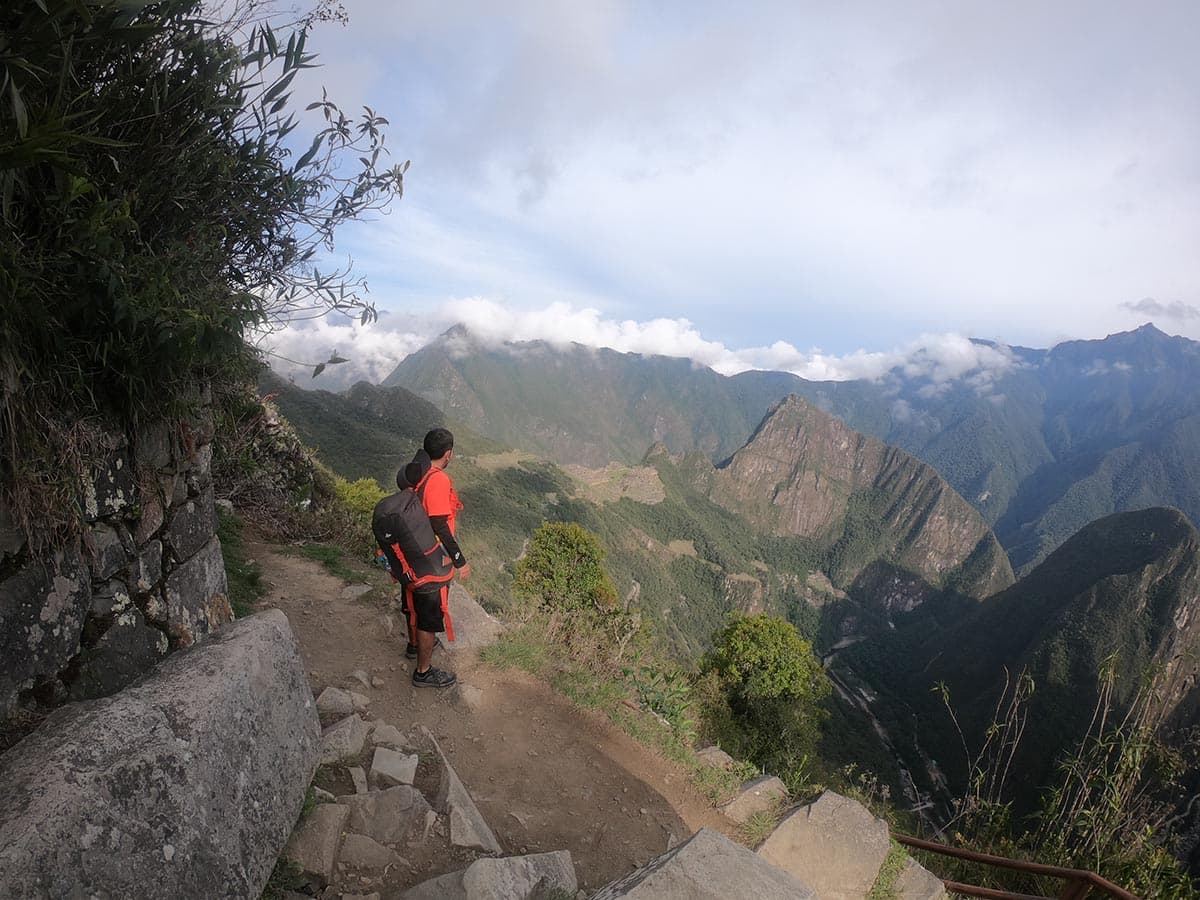
One of the most compelling experiences our country offers is the Inca Trail: a 4-day, 3-night trek from the town of Ollantaytambo to the majestic Machu Picchu.
Life is short, and reservations for that trip are made well in advance — so in mid-March I bought my entrance ticket for the great Inca Trail on October 27, 2019.
Time flew by, and the moment to start the great trek finally arrived. I brought a notebook specifically to jot down ideas that might come up on the trip. Without planning it, this experience left me with life lessons — metaphors drawn from what happened on the different days of the hike.
If you carry too much luggage, you become slow
I’ve always considered myself an improvised explorer: I never plan a trip down to the last detail. That said, I try to go well prepared — and this trip was no exception. From what I’d heard, the Inca Trail often has a lot of rain, and Peru’s climate is very varied, so I packed several things to be ready for any situation.
On top of that, to fill waiting times I had brought 2 books (one medium-sized), my notebook, 3 pairs of jeans (in case one got soaked by rain), 2 coats, and so on.
By rule, everyone also has to carry their own sleeping bag — so adding it all up, the luggage became heavy and bulky.
Still, with relative effort, there were no major complications while walking, and I finished day one without problems. But I felt I could have enjoyed the experience more if my pack had held only the essentials. Reflecting that night is exactly where this life lesson came from.
Often in life we carry in “our luggage” unnecessary things that make us slow and heavy — objects, clothes, gadgets, debts, routine jobs, toxic relationships — and that keep us from making the most of our great adventure.
Get rid of what you don’t need
To clear this dead weight, you have to take time to analyze what is unnecessary in your life — and what you’re carrying for no good reason.
Back on the trail, after day one I realized I had about 10 kg of unnecessary extra weight (2 jackets, 2 jeans, a heavy book, etc.).
At home, for example, we keep many old things that haven’t been used for at least 3 years, and for some strange nostalgic reason we hold on to them. But those things drain our energy — they make our spaces smaller.
And what about friends and family? Sometimes we keep hanging out with toxic friends — lots of jokes, fun, and parties, but no inspiration, entrepreneurship, personal growth, or good habits.
I realized this cleanup is something many people neglect. Instead of becoming lighter, little by little we do the opposite: we keep adding to our “luggage.”
Even with weight, you can still finish first
Even though I was carrying extra luggage (more than most), that didn’t stop me from reaching the first campsite ahead of the whole group. There are two factors here.
I think the reason I arrived first was, first of all, that I walked calmly at a steady pace without many breaks — I went at my own rhythm and didn’t need to stop. Maybe I wanted to arrive earlier so I wouldn’t keep carrying the extra weight. Either way, I noticed another life lesson.
I often hear people say they can’t achieve certain goals they want because they’re married, have kids, are sick, overweight, out of shape, uneducated, broke, lack willpower, lack health, and so on. There will always be excuses for the mediocre.
You could say some people carry extra luggage they can’t leave behind. But I believe that even with that extra weight, if you set a goal and move at a steady pace, you can achieve what you want. Yes — with that extra luggage the effort will be greater, but not impossible.
Enjoy life, even when the work is hard
It’s true the hike required physical effort — but what landscapes, conversations with strangers, sharing the challenge with others, meals with the team, and so many other good things happen at the same time you’re pushing yourself. And the truth is, you enjoy those extras too.
That’s how work in life should be. At work there are also many extras that are great — or should be. In my view, you have an obligation to enjoy life. And if work is the stage where most people spend most of their time, it’s very important to enjoy it properly.
Traveling light takes you farther and faster
On day one the guide told me day two is the toughest of all, because it has the biggest climb up to “Dead Woman’s Pass.” With that warning, and as a precaution, I hired a porter for day two so someone from the area could help carry my extra 10 kg. What a difference.
I felt amazing. I finished day two in record time and enjoyed it a lot. I felt so good that sometimes I ran along the trail and it didn’t cost me any extra effort.
That was exactly the difference of not carrying those extra 10 kg. If you don’t carry unnecessary weight, you can go much faster and enjoy the path more — something I believe also applies to the goals each of us sets in life.
You can always ask for help
Hiring the porter cost 90 soles — a price I initially thought was very high for only 10 kg. But after the relief of not carrying that extra weight, it was a huge help and let me do the hike faster, calmer, and easier.
This reminds me of starting a company or beginning to delegate work to other people. Yes — sometimes when you think about hiring someone or paying for extra help, it can feel like an unnecessary expense. But if you find the right person, in the end it’s an extremely important help — and that help is what lets you do other, even more important activities that can lead to better results in everything you’re trying to achieve.
Keep a book within reach
On day two, thanks to the help I got, I moved easily and quickly reached the highest point of the entire Inca Trail: Dead Woman’s Pass. While waiting for the rest of my campsite group, a couple of hours passed in which I had some conversations with other hikers.
But there were also quiet moments when I felt I could have used that “dead time” reading a book while enjoying a great landscape.
In the rush at departure I put the books in the 10 kg bag the porter was carrying. Big mistake. I believe you should always keep a book within reach — so you can read whenever you find yourself calm or waiting.
For example, many times in university, or waiting at a bank, or traveling alone somewhere, I’ve had my book with me and turned that moment into a productive one.
Give your best, have fun, do crazy things
As I explained earlier, there were two reasons I had an outstanding performance on the Inca Trail — and honestly I didn’t feel it was very demanding for me (though it was for several people).
The reason it wasn’t demanding for me was that I was already physically prepared thanks to years of race and sports training that I still do. Thanks to that training I could also push myself and go much faster than any other hiker.
My pace was so fast that I could afford to jog and match — or beat — the pace of the porters themselves, who are used to this trail for years and several times a year.
In that crazy experience of jogging I met some porters who also liked the idea, and a kind of race started. I kept the pace for a long time and, before reaching a checkpoint to see a ruin, I beat them in the final meters. That night I went looking for my competitors to greet them for the great effort and the good time we had.
I think that’s what life is about: building good habits so you’re more than ready for any opportunity life may give you — and also, when possible, doing crazy things and having fun to enjoy it fully — without affecting other people’s freedom. As they say… the crazy moments in life are the ones that give you the experiences that mark you, and that you can later share with family and friends.
The mountain is always there — you decide how to climb it
Doing the Inca Trail can sound difficult, but for me it was a simple experience thanks to my prior preparation. Of course, for other participants the challenge was greater. Even so, I noticed everyone’s attitude was joyful and good-humored.
To take part in this trek you need to register several months in advance and have some affinity for this kind of adventure. That’s why I can say all the participants had the right attitude.
In life, though, there will always be hard moments, and we won’t always have a positive attitude. It’s essential to remember that with the right mindset, you can enjoy the path and achieve wonderful things.
Legacy matters
Finally, something “magical” you could appreciate amid the beautiful landscapes and the great effort was seeing up close the ruins of our Inca ancestors. Along the whole trail you could see ruins and beautiful constructions — but what surprised me most was the quality with which the main part of Machu Picchu was built, and the Inca Trail as a whole.
The precision, the perfection of the stones of Machu Picchu’s altar — those constructions that leave you amazed at how hard and how long it took to create such beauty. That is what remains for us after hundreds of years — and the admiration we can feel for our ancestors.
From my perspective, that is also what each of us must do: create a legacy that future generations can admire. To do that, you have to build it as well as you can — with the detail and dedication it deserves — so that future generations marvel at your life’s work and can say…
Thank you.